To My Lost 20-Year-Old Self: A Lifestyle of Pursuing Dreams
A note before we start:
I wrote "A Lifestyle of Pursuing Dreams" in my senior year of university. I wrote some, stopped, then wrote some more a few months after graduating and starting work, and the thousand-plus words of drafts never got finished. I think it's time to finish it, using what I've done and gained over the past few years to talk with those drafts, with the lost me of that time. (Well, here I am~)
Back then I was writing down my confusion and guesses about dreams, and now I'm trying to give those guesses an answer. I've always liked this title, because it holds two meanings: pursuing "the lifestyle of your dreams" and the lifestyle of "pursuing dreams". "Do I know what the lifestyle I dream of looks like, and pursue it as my goal? Do I know what my dream is, and can I be happy with the lifestyle that comes with pursuing it?"
Which one do I actually want?
In my senior year, one morning I came home after a night of karaoke (my one and only), looked at the books scattered all over the floor, and my mind was strangely clear. A friend had dropped by the night before and seen the mess in my room laid bare, and it felt like a reminder: "It's time to face your own mess honestly."
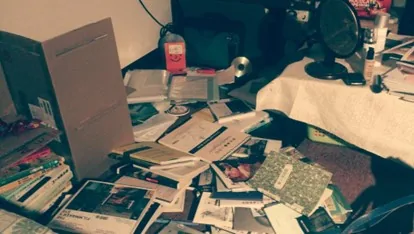
The theme of university was "lack"
I had no skill I could call a specialty, I'd lost interest in developing my department's field, and I lacked the courage to suddenly take a leave of absence or switch departments. So from my second year, for three or four years, I was stuck in "feeling inferior because of lack, and anxious because of feeling inferior", and I even felt guilty about days of relaxing and slacking off without actively improving myself.
I didn't know what I liked or wanted to do, and I was full of confusion about the future. So I took many courses in culture, languages and other departments that might interest me, joined off-campus activities in media and education, and read many books from different fields and genres. Through them I found what I was good and bad at, suited and unsuited for, liked and disliked, slowly crossing things off, sorting and summing up, and getting to know myself.
Those days of fulfilling learning were happy and solid. Although most of it left no concrete proof of ability (for example, I studied French and Spanish for two years and never took a proficiency test) and didn't help much with job hunting later, in the days after, it quietly helped with my outlook and thinking, academic research, relationships, the fun of daily life (?) and more.
But the purpose then was to find, through these attempts, what I really wanted to do and the field I wanted to build expertise in, and in that respect the result was a failure.
You could say there was no progress at all
With no clear goal or professional strength, job hunting after graduation was painful and confusing. In the end I joined a company related to my major, and convinced myself: "I'll start in the field I'm more professional in, and learn some skills that are useful in other industries too!"
I've never known whether that judgement was right or wrong, because the job lasted only a short half year. I did gain practical experience, of course, but didn't leave behind any great achievement that made my résumé shine. The biggest gain was in myself: I deeply realised "it turns out I care a lot about whether the company itself fits my values and ideals, more than pay and benefits, organisational culture or overtime (probably)."
Having been through the Sunflower Movement during university, I'd grown the idea of "wanting to change society", but the me back then was small and powerless, and couldn't say concrete methods or directions, so I kept the idea in my heart. I never forgot it, but I was embarrassed to say such a positive, grand idea out loud.
One of the reasons I quit decisively was that a university professor nudged me into grad school, and I passed the entrance exam (details in 〈Looking Back | Three Years of Grad School〉). Not wanting to be a full-time grad student, I needed a part-time job, so I looked again at my past experiences, full of variety but without any remarkable results, and suddenly, from an unrelated environmentally friendly habit, an idea flashed: "lifestyle habits = things I believe in; getting others to believe in them too = changing society? Probably... ?"
Later, during grad school, I also worked part-time at an environmental foundation. I can't say I did anything great, but several environmental issues have been seen and discussed by more and more people in recent years, so I think I did contribute a tiny bit to changing society.
After finishing grad school I left the foundation too (I still felt it wasn't what I most wanted to do). The idea of "wanting to change society" didn't change, only into a smarter-sounding phrase: "wanting to have social impact", a wish as vague as the one back then.
My job after graduation was about translating and promoting knowledge. The heavy workload forced me to become a ruthless working machine, painful but happy, until my body sent warning signals, so I turned to answering another guess: "Does 'what I want to do' also include 'the life I want to live'?"
The point may not be just "the dream"
"...Every day I sleep until I wake naturally. After getting up, I tidy the house a little while waiting for Bin to come back from the fields, then have a leisurely breakfast and read. Then I look at what work I've scheduled for the day, whether it's drawing (拓繪), preparing lessons or writing, and start working while listening to music... So on average I probably work for less than four hours a day... With so little working time, what do I do the rest of the time? The rest of the time I do whatever I want! ... Is the 20-some thousand (NT dollars) enough? In Luye, it's not only enough, there's some left to save..." — Liao Mi, 〈Working Hours for Earning Money〉 (in Chinese)
When I wrote "A Lifestyle of Pursuing Dreams", I was probably inspired by Liao Mi's daily-life posts. I found out that this kind of life was possible, and I deeply longed for it. "Maybe... the point isn't only reaching a faraway dream; having a way of life and a rhythm that feels comfortable is important too." Perhaps that's the long-term plan?
But tamed by society, I was doubtful about this idea, and kept choosing to try "finding a dream and pursuing it". Yet on this road of testing a hypothesis, testing "can I put up with a certain lifestyle in order to pursue my dream" was much harder and more painful, while exploring "what does the lifestyle of my dreams look like" was relatively easy, and after the pain I took this path.
And now I have the lifestyle of my dreams and feel satisfied. Being a freelancer isn't far from Liao Mi's "work very little, and do whatever I want the rest of the time". My income isn't yet enough to be worry-free, and I'm still exploring ways to make this lifestyle last.
As for the dream, during these freelance days it has gradually begun to take shape, and I'm slowly working on it in my "do whatever I want" time. But it's not yet the time to talk about it confidently and generously, so I'll stop here for now.
Last words
Maybe for some people, the days of moving towards a dream and cutting through thorns are what truly feels like living, and that's great too. I once believed that too, and tried to become that kind of person, only to find it didn't suit me. (Maybe it will in the future? At least not now.)
In the end, you have to walk it yourself to know what you want and what suits you.